Warning Signs of Brake Problems — Do Not Ignore These
Brakes are your vehicle's most critical safety system. These warning signs mean your stopping distance is increasing right now.
-
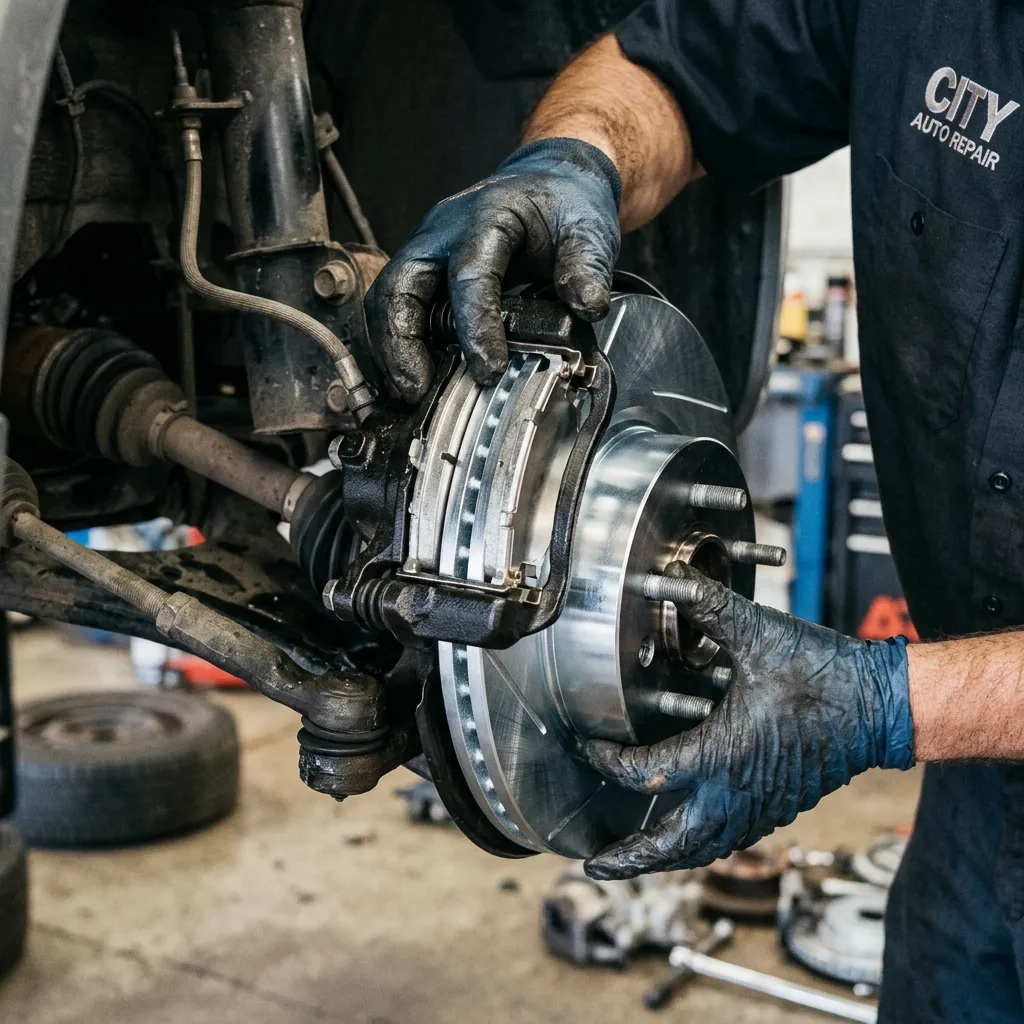
Squealing or squeaking when you apply brakes (wear indicators contacting rotor)
-
Grinding or metal-on-metal sound — pads worn through, rotors being scored
-
Vibration or pulsation through the brake pedal (warped rotors)
-
Car pulls to one side during braking (stuck caliper or uneven pad wear)
-
Soft, spongy, or low brake pedal (air in the line or fluid leak)
-
Brake warning light illuminated on the dashboard
-
Burning smell after heavy braking (seized caliper)
Squealing vs. Grinding — What's the Difference?
Squealing = wear indicators telling you pads are getting low. You still have time, but act within a few weeks — don't let it go to grinding.
Grinding = metal-on-metal contact. Your rotors are being scored right now. Braking distance increases dramatically and this is a safety emergency. Every mile driven in grinding condition adds rotor damage, turning a pad-only job into a full rotor replacement. A $150 pad job becomes $400 fast.
The Real Cost of Delaying Brake Service
-
New brake pads only: ~$80–$150 per axle — act now while pads squeal
-
Add rotor replacement from grinding damage: $250–$400 per axle
-
Add caliper replacement if left even longer: another $200–$400
-
A $150 pad replacement becomes a $700+ repair in 3 months of ignoring it
-
We perform free brake inspections with any major service visit
Union Grove and Racine County roads in winter are hard on brakes — road salt, cold weather, and stop-and-go traffic accelerate wear. Get your brakes inspected at Ibarra's Auto before every season change.
Frequently Asked Questions
How do I know my brakes need replacing?
Common signs include squealing or grinding noises, the vehicle pulling to one side when braking, a soft or spongy brake pedal, or the brake warning light turning on.
How long do brake pads last?
Brake pads typically last 30,000–70,000 miles depending on driving habits, vehicle weight, and pad material. City driving wears pads faster than highway driving.
Should I replace rotors when I replace pads?
Not always. We measure rotor thickness and check for scoring. If rotors are within spec, we resurface them to save you money. Heavily worn or warped rotors are replaced.
What is a brake fluid flush and why is it important?
Brake fluid absorbs moisture over time, lowering its boiling point and reducing braking performance. A flush every 2–3 years keeps the hydraulic system reliable.
Can you inspect brakes without an appointment?
We offer free brake inspections with any major service. Call ahead and we will do our best to accommodate walk-in brake checks.